
 By
By White & Brooks is no stranger to interior design trends. Colour drenching , dopamine décor, bloomcore, wallpapering the ‘5th wall’ (that’s the ceiling)? Our estate agents have either seen it on Instagram, spotted it in an interior design magazine, or marvelled at the real deal when on valuations and viewings.
Create the feeling of space
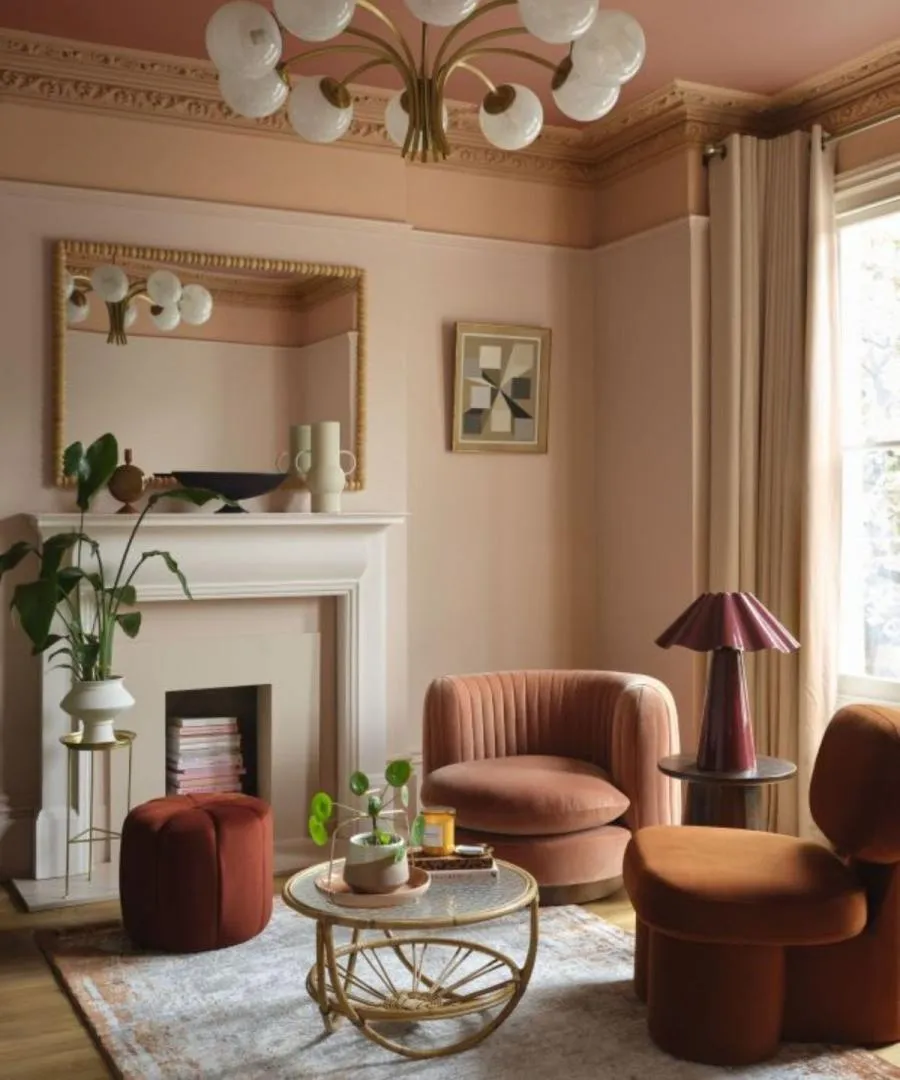
While we appreciate some trends are a step too far, there is one gaining popularity that isn’t too bold to embrace. Colour capping is the go-to technique deployed by interior designers when they want a room to feel bigger or the ceiling higher than it actually is.
Think of capping as a colour blocking-meets-ombre paint effect, using different tones of the same colour or colour family. The lightest shade is applied to the lowest part of the room, working up to the darkest shade for the ceiling – the colour ‘cap’. The finished result should draw the eye upwards and the ceiling should feel further away.
Pale can be interesting
Colour capping can involve light, earthy neutrals, pastels, biscuity beige shades and the warmest creams – colours that are subtle and inclusive, not divisive. The latter is critical if you are preparing your home for sale as multiple surveys have shown daring or dramatic paint colours can put buyers off. Decorating a new home you’ve just moved into? Knock yourself out and colour cap with dark, moody shades to great effect.
Decorative divisions
West Sussex’s handsome period homes are made for colour capping. Listed Georgian townhouses in Chichester, the character-packed homes in Funtingdon, and the 19th century apartments near the sea in Bognor Regis and Aldwick will more likely have the wall furniture that naturally makes colour capping easier.
When we say wall furniture, we mean the decorative flourishes that were commonplace in bygone eras – skirting boards, dado rails, picture rails and ornate coving. While these features served different purposes years ago (did you know dado rails were introduced to stop people marking the walls when pulling out dining table chairs?), today they provide a colour capping template.
‘Fake it’ fixes
‘What if my rooms have skirting boards and nothing else?’, we hear you cry. Colour capping can still be a trend you buy into. Head to a DIY store or timber merchant for a wide array of decorative mouldings that can be affixed using adhesive. If that sounds like too much hard work, you can simply divide walls with horizontal lines. Use a laser level and painter’s tape to section off areas, choosing heights that suit your room.
How to colour cap a room
Once any decorative dividers are in place, you’ll probably need three shades of the same paint colour or family – light, mid and deep. This will roughly fall as light for everything below a dado rail, mid for between the dado rail and the coving, and the darkest shade ‘caps’ the ceiling. The rule of three isn’t fixed, however. You can still colour cap by using one shade from the skirting board up to a picture rail, and another above a picture rail and across the ceiling.
Choosing the right shades of paint
If making a paint choice fills you with decorating dread, head to Little Greene. Many of its colours are available to buy online in pale, mid, deep and dark, removing the guess work. Take a look at the China Clay, Rolling Fog and Slaked Lime colour families as they’re perfect neutral colour capping options.
Another alternative is to head to a local decorating centre and get your paint shades mixed to order. This route usually presents 100s of hue and saturation options, displayed in vertical paint colour families, dark to light, to make your selection easier. Another bonus of colour mixing is being able to buy smaller amounts of the colours you need for limited areas, reducing paint waste.
Where to buy paint locally
Chichester
Runcton
Bognor Regis
As estate agents in West Sussex, we value homes that are well presented ahead of a sale. If you are thinking of selling in Chichester, Bognor Regis, Felpham, Aldwick, or in the surrounding areas, ask us how your home’s current condition might affect its appeal among buyers. You can book a no-obligation valuation, during which we can discuss the current market and your moving plans.
*Image taken from pinterest. Home and Gardens. Benjamin Moore.


Share this with
Email
Facebook
Messenger
X
Pinterest
LinkedIn
Copy this link